Your Marketing Stack is Broken. (And it’s Not Your Fault).
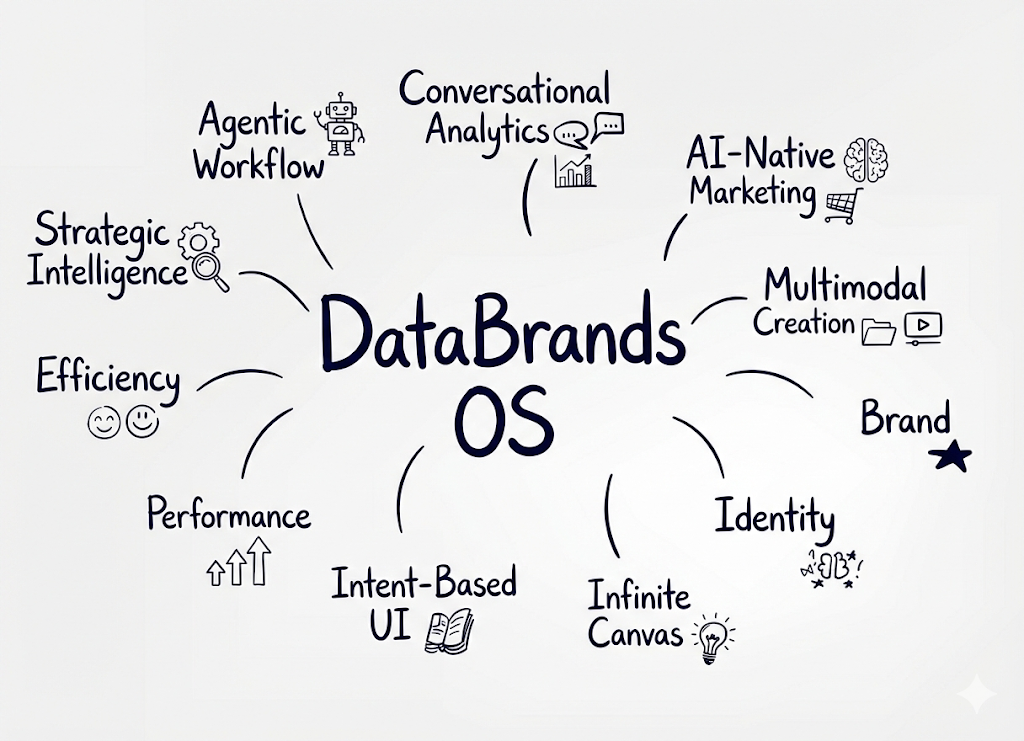
You are trying to run a 2026 marketing strategy using a 2015 workflow. It’s time to consolidate.
If we looked at your browser right now, how many tabs are open related to a single marketing campaign?
Chances are, it’s at least five:
- A Google Doc with the strategy brief.
- ChatGPT for brainstorming captions.
- Canva or Figma for visual assets.
- Hootsuite or Buffer for scheduling.
- An analytics dashboard (or a messy spreadsheet) to track results.
We have entered the era of the “Marketing Franken-stack.”
We have amazing, specialized tools for every individual slice of the job. But these tools do not talk to each other. They are silos.
The biggest inefficiency in modern marketing isn’t the creation of content; it’s the friction of the handoff. It’s the constant downloading, uploading, copy-pasting, and reformatting between incompatible systems. You aren’t just a marketer anymore; you’re a human API connecting disparate software.
The High Cost of Fragmentation
This fragmented workflow doesn’t just waste time; it dilutes context.
When you move from the Strategy Doc to the Design Tool, context is lost. When you move from Design to the Scheduler, context is lost again. By the time the post goes live, it’s often disconnected from the original strategic intent.
We realized you don’t need another specialized tool. You need a unified operating system.
We built DataBrands to eliminate the handoffs.
The Unified OS: Context is Everything
DataBrands consolidates the entire marketing lifecycle — strategy, creation, execution, and analysis — into a single, AI-native environment.
Here is why a unified approach wins:
1. Strategy Meets Creation (On the Same Canvas)
Usually, your strategy lives in a document that nobody looks at while they are designing. In DataBrands, we have a Strategic Intelligence layer that analyzes market trends and competitor data. This lives right next to our Infinite Canvas, where you build the actual creative assets. The AI that helps you generate concepts is aware of your strategic goals. You don’t have to keep briefing it.
2. Creation Meets Execution (Without the Download Button)
The most annoying workflow in marketing is: Download image from design tool -> Log into scheduler -> Upload image -> Paste caption. We eliminated this. Because our canvas and our scheduler are part of the same OS, execution is seamless. You build the concept on the canvas, and through our Agentic Interface, you simply tell the system: “Schedule this for tomorrow at 12 AM”. The agent handles the handoff. You never touch a “Download” button.
3. Execution Meets Analysis (In Plain English)
Instead of having a separate analytics platform that requires a data science degree to understand, our analytics are built into the core chat interface. Because the system knows what you scheduled and when, you can simply ask it in plain language to visualize the performance of specific campaigns or hashtags. It’s a closed loop between action and insight.
Stop Being a Human Router
It’s time to stop paying for five different subscriptions that don’t work together. It’s time to stop spending your day copy-pasting between tabs.
Marketing is hard enough without fighting your own technology stack.
DataBrands launches publicly on February 17, 2026.
Consolidate your workflow and get your time back.
👉 Request Early Access: trydatabrands.com
Published originaly on Medium. View the official post for comments and engagement.
Go to original publication